Understand how your body moves using cutting-edge motion analysis technology. Improve performance, reduce injury risk, and optimize every movement with scientific precision.
Biomechanics is the science of analyzing human movement to understand how muscles, joints, and forces work together during physical activity.
Our advanced assessment systems capture precise movement data, helping athletes, coaches, and medical professionals improve technique, prevent injuries, and maximize performance.
High-speed optical camera sampling rates.
Industrial sub-millimeter precision mapping.
AI computer vision joint node skeleton tracking.
Multi-planar ground force dynamics.
Advanced movement analysis for peak athletic performance and recovery.
Full body movement capture using markerless precision cameras.
Identify muscular asymmetries and spine alignment imbalances.
Evaluation of stride patterns and feet contact mechanics.
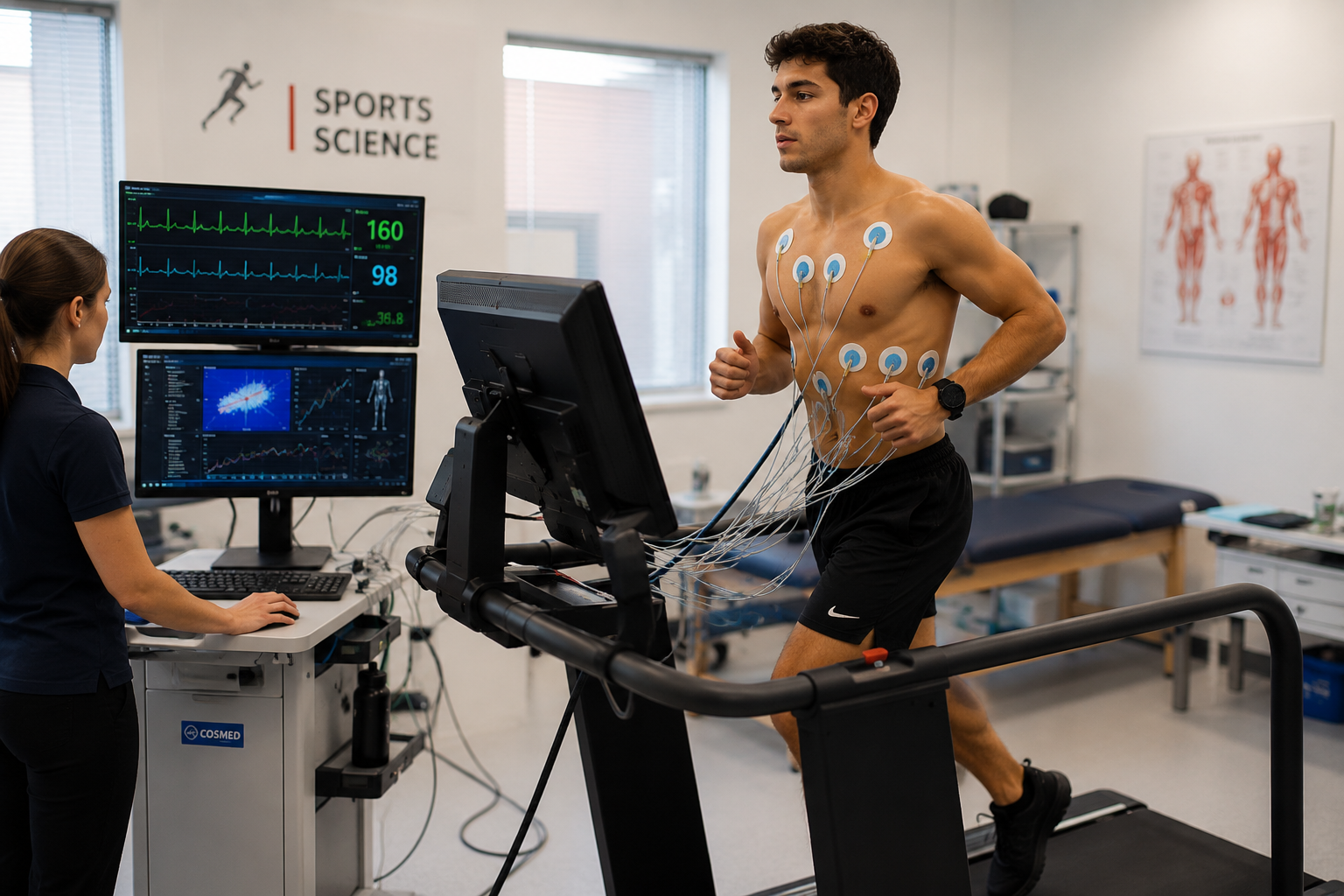
Detect weaknesses in dynamic shoulder and limb movement.
Minimize excessive kinetic stress on knees and hips.
Measure balance, impact forces, and ground reactiveness.
A data-driven approach to enhance every aspect of your performance.
Understand athlete goals, injury history, and sport-specific requirements.
Capture movement using high-speed cameras, sensors, and force measurement systems.
Analyze posture, joint angles, force production, balance, gait, and movement efficiency.
Generate an easy-to-understand report with graphs, metrics, and expert recommendations.
Provide corrective exercises, training modifications, and performance optimization strategies.
State-of-the-art sensory equipment powering our biomechanical measurements.
Full-body kinematic scanning without physical marker attachments.
240fps cameras tracking sub-millimeter trajectory changes.
Dual force plates evaluating 3D ground reaction force dynamics.
Sparsely distributed inertial sensors mapping joint nodes.
Foot pressure mapping sensors displaying load force maps.
Generates skeletal torque projections and joint recommendations.
Scientific movement diagnostics driving injury reduction and output gains.
Optimize joint displacement vectors and stride mechanics to conserve metabolic energy.
Maximize acceleration forces, vertical jump dynamics, and stability across joint structures.
Expose early strain anomalies and force asymmetries before they develop into muscle tears.
Assess stride flight time, foot-strike angle, landing shock distribution, and reactive indices.
Monitor static posture lines and dynamic center-of-pressure stability curves.
Establish performance baselines and verify changes across seasons using metrics.
Whether you're an elite athlete, coach, or sports institution, our biomechanics assessment provides accurate insights to enhance performance and reduce injury risk.